Sunday, 28 March 2021

Editorial Advice

I have no idea how to edit. I know this, because every time I have to do it, I end up staring at a page of words and not knowing what to do with them. I've read a few books of being a writer and most of them have a chapter on editing, but I think you're supposed to have picked up the skills that will make this easy in the preceding chapters.

Somewhere in my brain there is a disjoint that doesn't connect one with the other.

A quote attributed to Antoine de Saint-Exupery, the early 20th century aviator:

Perfection is achieved, not when there is nothing more to add, but when there is nothing left to take away.
I'm taking this as my mantra. I've often had trouble keeping to word limits for competitions, particularly in magazines, and I end up stopping halfway through to cut out what I think I don't need. Of course, by the time I realise I did need it, it's too late, and I have to remember what I destroyed.

When I write now, I don't edit (apart from the occasional grammar or spelling error that chagrins me). These drafts are usually much longer than I want them to be. 3000 word limit? I write what I feel like before I start stripping down. If I end up with 5000 words, I have to almost punish myself to strip out 2000 words. (Thankfully, it is rare that things go that far.)

This is great practice! Getting a story down to the core is the best feeling. Pulling out extra words, worthless turns of phrase, clichés!

I never had a problem with clichés before. I thought of them as being like tropes. Tropes are useful for saving exposition. I don't need to explain a whole pile of techno-jargon for hackers if I can quickly talk about bots, firewalls and spiders. I know these will mean something to most readers, and I can decide whether they are standard pieces of code running somewhere else or virtual creatures and actual walls of fire in a full 3D virtual world later.

But clichés lost their purpose quickly. While I might be able to use a cliché in a novel and get away with it, in a short story a cliché is stopping me from telling my story. This has stolen a blade from my armoury, but has forced me to sharpen other weapons.

A word to the wise (probably not advice most writers need); if you need to work to a tight deadline, make sure you don't waste any time in the editing. It will probably take longer than you imagine. Time is as important as word counts or word choice.

So strip it right down. Become a butcher. Every cut is not a random slice, but is creating a cut of meat that someone will find succulent.

Resources

Writer Craig Hallam has begun a YouTube channel with some advice on writing and the industry.

MasterClass teaches writing skills from people who do this for a living!

Daily Writing Tips has some editing exercises with sample solutions.

If you know of any other resources that could be added to this list, please put them in the comments.

Sunday, 21 March 2021

Recognised

 So, I mentioned in my last post that I'd been entering competitions. One of those was in a magazine. It was a flash fiction comp where the first and last paragraphs were the same but the meaning had been changed by the story.

Sadly, I didn't win, BUT...

... I did get into the highly commended section. Seeing your name in print for something positive is a BUZZ, for sure. I will continue entering competitions and honing my craft. JOIN ME! 

Tuesday, 16 March 2021

On Forwardness

 So much has happened since I last posted. It has been a trip. First, I FINISHED MY DEGREE and a very short time later I got a new job. It isn't related to writing (systems engineer), but it pays the bills. Happiness is: not worrying about where the next gas top-up comes from.

Then, I started playing in a new RPG campaign. That's coming up on two years running once a week and has been fun. As a writer, I've always seen the value in being part of these shared story experiences, but I also see how difficult it can be to fit in your own character's "narrative" at all, let alone at an appropriate moment.

After that, some people in China started getting sick and the world was thrown upside down. I can't believe that's an ongoing thing, yet here we are with a year under our belts and the world is still as it was. I've been working from home since, delineating between "work" and rest under my own schedules (sort of).

Writing has been so far from my mind as I've adjusted to much of that, but I've started entering competitions to push myself a little. Some of them are on websites where other entrants can read and give feedback, which is always a good thing. It helps having people give you a touchstone as to how you're doing.

My most ambitious project was entering a competition for a substantial prize. I didn't expect to win, but I'd hoped to get some really strong feedback from others: Not a peep. I always panic when that happens.

In relation to my RPG stuff, I do create little rules supplements for my favourite games and share them online. I don't expect people to pay (although that option is there), but it's nice when someone does. Sadly, that is a rare treat, but even more rare is for people to leave reviews. I know there's the old addage, "if you can't say anything nice, don't say anything at all," but that isn't useful for helping others build on their craft. 

So, where possible, I will leave constructive criticism. Mostly, I try to point out places where a story can get confusing. Not every reader is going to be a sophisticated reader, and you have to write for that. I'm just as guilty of this as others.

And that's where I am. I'm coming back to writing, slowly but surely, and I'll be pen wrangling a lot more as I do.

Sunday, 3 March 2019

Word Abuse

I'm going through a couple of writing courses at the moment, which I sometimes use as a means of inspiration. Some of the more structured courses come with little writing exercises. These are usually enough to whet the appetite, or put a particular skill to the test.
One such exercise was the application of words in unusual contexts. The premise is that an ordinary word used in an inappropriate setting can create a new mood or form for the writing.
Some of the responses to this exercise are excellent (no I won't be sharing them here), but there are others where I feel that someone is abusing the language.
As I'm not trying to embarrass anyone, I won't be giving examples, but it got me thinking about something. Is there anything you've written in the past that you look back on and shudder? Have you ever written a poem, song, story that you now feel is so weak or embarrassing you wish it had never existed?

As for the exercise, my own example is this:

Uninvited, I was overtaken by a vibrant anxiety, filling my head with noise and heat.

Tuesday, 5 February 2019

Progress Update: Is it Drafty in here?

I'm on my 4th draft
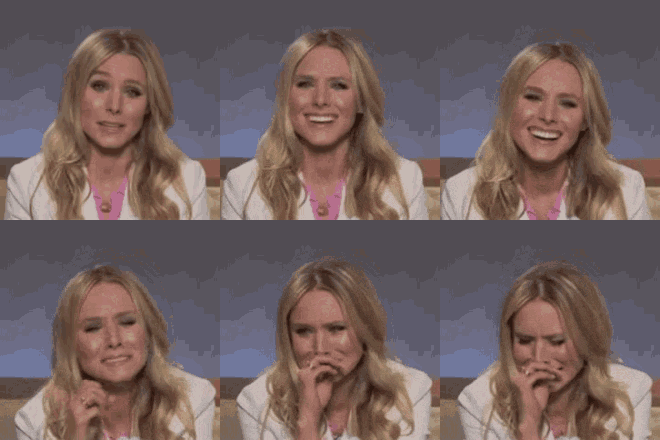
Kristen Bell fake laughs then criesThat isn't a boast, and it isn't strictly true. It is kind of my 3rd draft, because my second draft was boring. I mean, painfully boring. I had somehow managed to strip my story of everything that made it interesting. Imagine that. Hahaha.....
Seriously. The 3rd draft became 2.2 as soon as a read 2.1. It wasn't pretty.
So, 3rdish draft is about being a stickler. I'm stripping everything out that I find weak and annoying. It looks like that might include the first two chapters!
Two...
...entire...
...chapters.

Thursday, 31 January 2019

My Notebook and my Treacherous Brain

Do you carry a notebook? Something to jot down ideas in, even if it is just a name that pops to mind, or a simple phrase that arises in your head that you can imagine one of your characters saying. It certainly is one of the things that people are advised to do; have a notebook on you at all times.
I have a notebook. I bought it for myself as a little treat. It's a pocket moleskin book, with squared pages, just in case something needs to be sketched, rather than written. In the first two weeks, it never left my pocket. I would scratch down ideas, mispronunciations of words (in case I wanted to have a character to whom English was a second language), small ideas that popped into my head. Tiny observations of the oddest things.
A writer's becomes frustrated as the day passes without inspiration, turns to drink by nightfall.
Suddenly, it all dried up. I had gone for more than a month with nothing to add to the notebook. I put it down to my perception. My force of attention was obviously being directed elsewhere. I had other concerns (family issues and university tasks). I had not used the ideas I had already recorded. My brain wasn't on form, but it would probably come back.
After two months, I stopped carrying the notebook with me. I didn't see the point.
And the ideas started coming back!
This has perplexed me my entire life. How can I be so full of ideas when I have no way to record them, yet when I have a notebook, smartphone, sketchbook to hand, my brain falls silent?
A concept struck me that I think answers the question: My notebook had become a reminder of a responsibility. The more I attempt to write, the more I feel the duty of output. This made the notebook no longer a tool to aid in my collection of ideas, but a task master, demanding ideas to feed it. This has never been a good place for my brain to be.
How do I escape this panic? I have to listen to my own advice. The muse is not inspirational of itself. Inspiration comes from being the muse. I write something in the notebook every day, even if I end up scribbling it out the following day. That way, inspiration will come, if only intermittently. When I have one good idea, it sets me up for the next good idea. If I can connect enough good ideas together, then I have a story.

Thursday, 24 January 2019

Where art thou, Muse

Inspiration is easy.
I'm not kidding. Honestly. I walk around with my little notebook, hearing snippets of songs, snatched segments of conversations, or being dumbstruck by a view or image I encounter. All of these go into the book.
Then all I have to do is write!
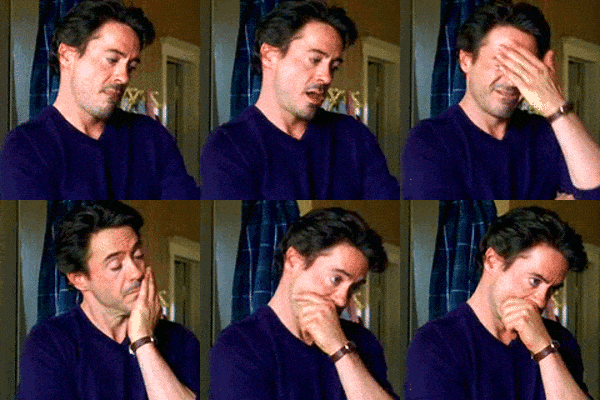
Robert Downey Junior rubs his face in exasperation
Yeah, cause that's easy.
Thats where all of the ideas, inspiration, moments, and observations come unstuck. Transferring the things you've collected onto the page without simply recording something verbatim is hard. How does this astounding sunset become part of the story? How can I transfer the awe I felt as I watched the clouds explode with light into a story about a woman who has just been shot? Why do I never find anything that fits with what I'm trying to write?
Well, I probably do, but I need to put the language into context. I need to get the reigns on it and make it do what I want it to do. I need to be the writer.